
Ariana and the Elder Codex is a side-scrolling action RPG from Hyde Inc, the developers of my least favourite Digimon game. The story takes place in the Library, the source of all the world’s knowledge, and inside are tomes known as the Seven Hero Codices, ancient books that are the source of all magic in the world. Or at least, they were. These seven magic books have been vandalised and changed, and with the damage done to them, magic ceases to exist in the world.
You play as Ariana Virellis, a young Librarian with the ability to enter the codices and experience the stories written within their pages as living, breathing worlds. Using her magical skills, she must battle against invading monsters and repair the damaged books to bring magic back to the world. Sometimes I read back these story summaries I write and question my life choices.
There’s a secondary plot thread about Ariana’s missing, presumed dead parents that I can only describe as “Anime AF”, but overall, I didn’t really care for the story. It’s not that it’s bad; it just didn’t interest me. Characters talk for way too long, and I’d often find myself zoning out and reaching for my phone or a cat to distract myself from the inane drivel the characters (especially the faceless NPCs) would spill from their little mouths.
Each of the codices has a unique story to unravel and interact with, and these I found far more interesting than the plot unfolding back in the Library. They make the world inside the books feel alive, and even though their fates have already been written, through Ariana’s actions and experiences, you feel like you’re helping the characters who live here, even though in reality they’re just ink on a page. It’s quite a profound feeling, realising that even while taking actions within the world, you’re still only a passive observer to the story, unable to change anyone’s fate.
Gameplay is a mix of 2D platforming and flashy real-time combat, but despite appearances, I wouldn’t really call Ariana a “Metroidvania”. Firstly, because I don’t much care for the term these days, but also because to me it implies that your progress is periodically blocked until you find a new power-up to move the story forward, but here that is not the case. If I had to compare Ariana to any metal-plated side-scrolling shooter type from the 80s, I’d be more comfortable going with Mega Man.
You’re free to tackle the Codices in any order: first, the four Elemental Codices, then, once those are repaired, the three Phenomena Codices. There’s a bit of freedom in how you approach the game, but not as much as I had hoped for.
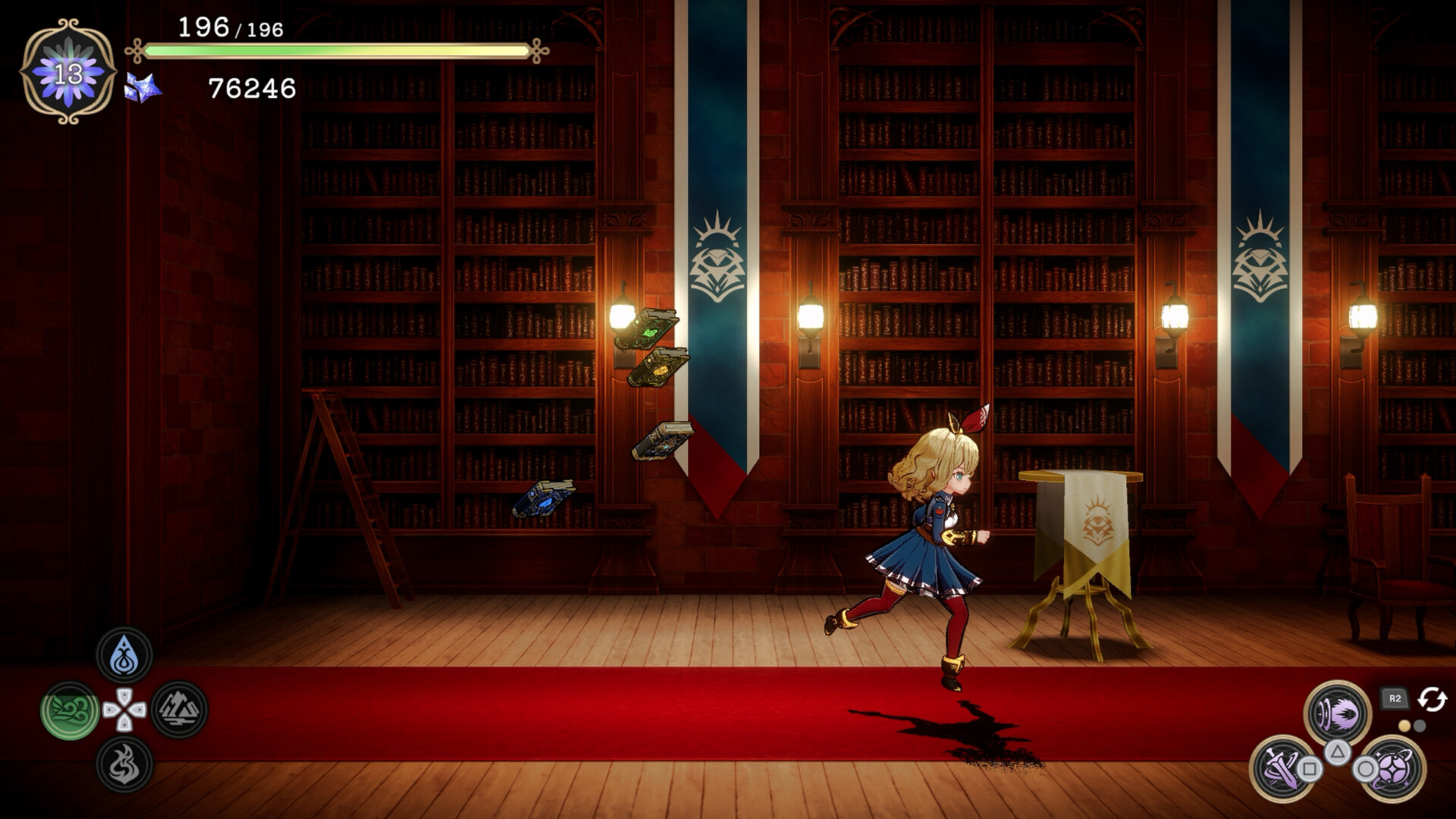
As the names imply, each of the first four Codacies is governed by elements, and each one is mutually effective against its opposite: fire and water are effective against each other, and earth and wind are effective against each other. Repairing a book and finishing its story will give you access to spells of that element. I was hoping for something a little deeper than this, or at least for circular weakness, like fire being weak to water, which is weak to earth, which is weak to air, or something like that. Something to give more strategy to the order in which you tackle the books.
Combat itself is flash and fun, if a little mindless at times. X is the dedicated jump button, but the other face buttons are for spells. Ariana starts the game with a sword attack, a recovery spell, and a weak fire attack, which is useful due to us starting off in the Water Codex, but holding R2 switches to a secondary selection of spells, meaning she can carry six active spells at a time, and as the game progresses and our Librarian unlocks more spells, combat becomes utter carnage.
The sword attack is whatever; it’s Ariana’s default strike and is more than enough to dispatch weaker enemies, but the main draw of the combat is the magic combo system. Most enemies in the game have a coloured glow around them, blue, red, green and yellow representing their element, and hitting them with magic they’re weak against is devastating.
First, if they have a yellow stun gauge above their head, it’ll be depleted in no time, leaving them open to an onslaught of critical hits. But spamming a spell against stronger enemies that don’t go down so easily will cause them to accumulate that element, ending with an explosive Elemental Burst that deals a ton of damage to themselves and surrounding enemies.
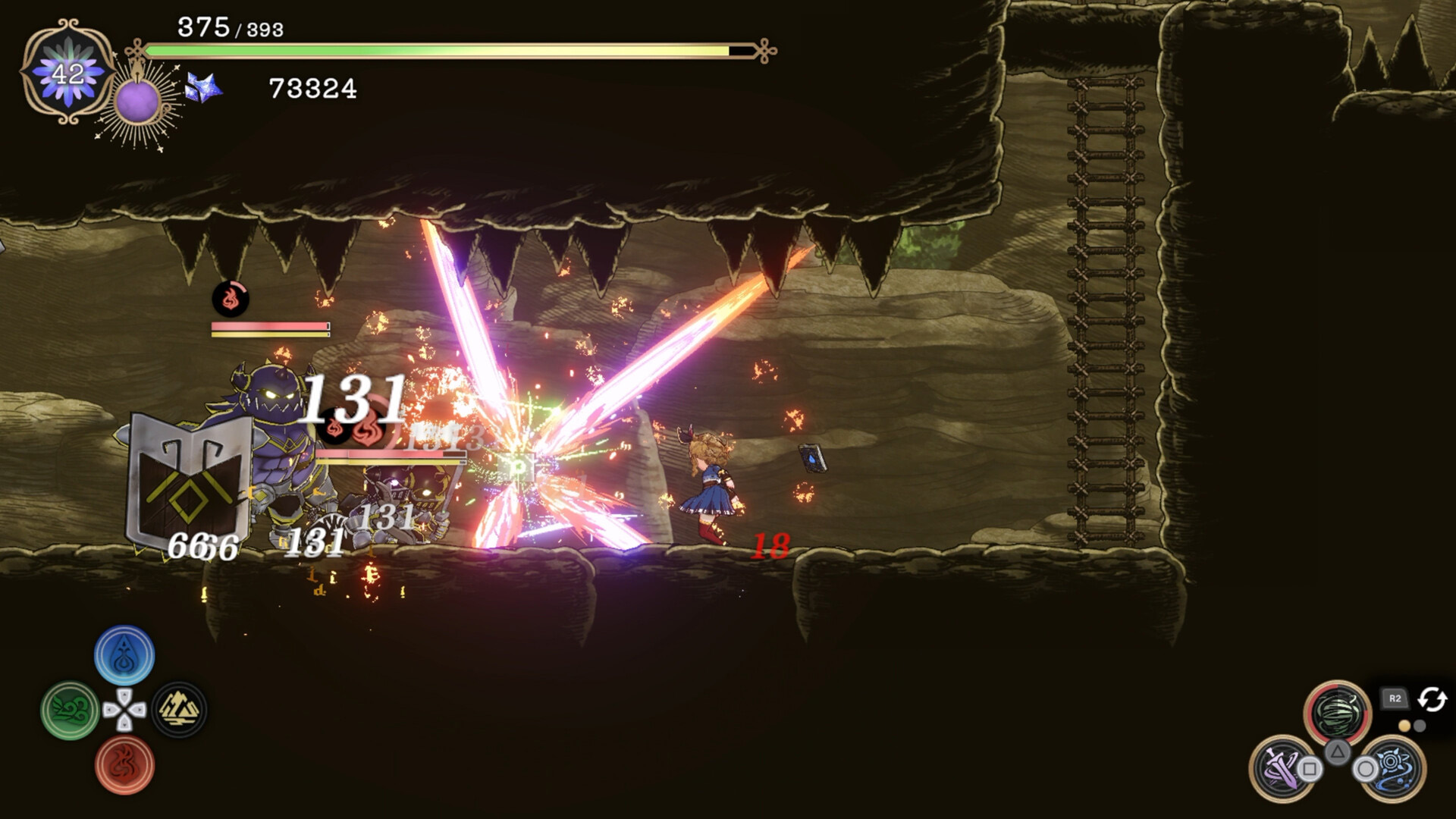
This absolutely trivialises encounters and bosses of the opposite element. For example, after clearing the Air Codex, I was able to go into the Earth Codex with an Air spell that covered both sides of Ariana and caused almost every enemy to burst, and I was able to take down the boss in little over a minute. However, it left me feeling conflicted. I was insanely powerful, but combat had just turned into “jump into the middle of a pack of enemies, activate spell, win, repeat” over and over again.
Things are shaken up a little when exploring the three Phenomena Codices, as enemies don’t just appear in one colour; there’s often a couple of different types grouped together, meaning you have to switch up your spells to maximise your damage. At least in theory. In reality, all enemy types, even ones strong against the spell you’re hitting them with, will accumulate that element and trigger an Elemental Burst anyway.
Later on, Ariana gains the ability to form change, allowing her to take on aspects of the chosen element, strengthening her attacks and making elemental bursts much easier to activate. The change gauge increases whenever she attacks with that element, and can be activated if the gauge is at least half full, so it’s great to pull out in a pinch. Combine this with the Graviton Cannon that can be unleashed once the SP gauge is full, and Ariana becomes a real menace to the monsters invading the Codacies in the back half of the game.
Defeated enemies drop crystals called Repair Fragments that, along with weak/strong magic remnants, can be used to upgrade Ariana’s spells, increasing attack power, range, and the length of time they stay active. The aforementioned fragments and remnants can also be used to forge Magical Items to equip.
Ariana can equip up to five Magical Items at a time, but each item has an “equip cost,” so you can adorn her with anything you like as long as it’s within the cost limit. Luckily, you can find “Magic Equip Pages” as you explore that increase the total cost limit, allowing for a greater quantity of more powerful items to be equipped as the game goes on.
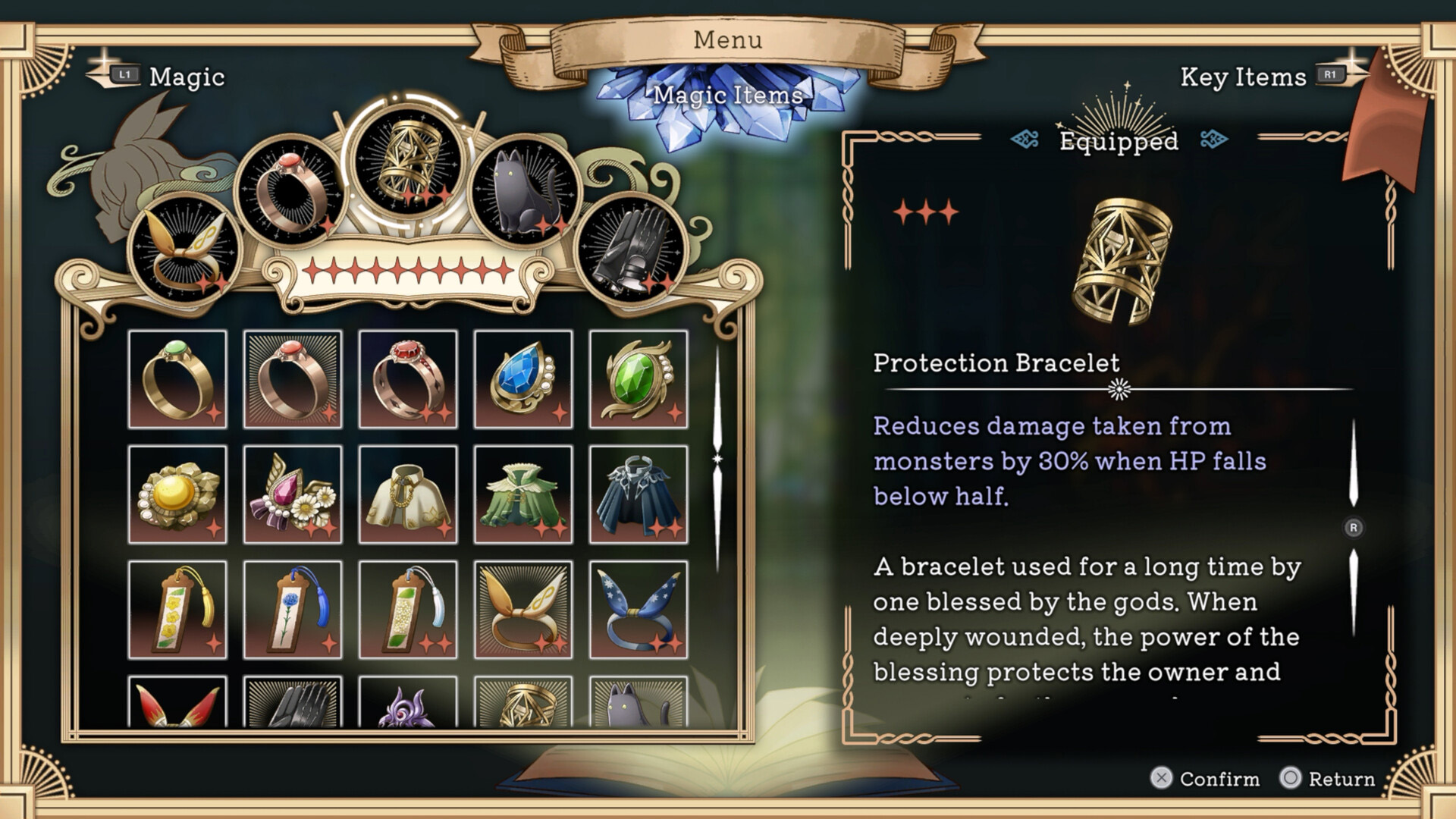
These helpful magic pages, along with items called essence/combat symbol, which give a minor increase to Ariana’s HP and attack power, respectively, are usually given as rewards whenever Ariana repairs an “Altered Point.” These are visible holes in the pages of the codex, with a menacing, purple, glowing eye looking out.
Interacting with these tears transforms the immediate area into an arena, and you have to fight off several waves of enemies before the timer runs out. You’re scored on how quickly you dispatch your foes from A to D, and the marker for each rank is clearly displayed on the timer, so you know if you’re going to make your desired rank or not before the end of the fight. It’s not all violence, though. A handful of Altered Points lead to time attacks where you have to get Ariana from the starting point to the exit in as quick a time as possible, which adds a nice bit of variety to the trials.
Not all Altered Points are visible at first, however. Some monsters will be hiding them on their person and must be defeated for the tear to be revealed. The in-game tutorial describes them as monsters “emitting a suspicious darkness”, but in my experience, it’s difficult to tell who’s emitting what due to the enemies usually clustering together, so I found just killing everything I could find usually worked. This is also worth doing because each time Ariana defeats an enemy, she gets EXP, and after she’s accumulated enough, she levels up, gaining slight increases to her Attack and HP.
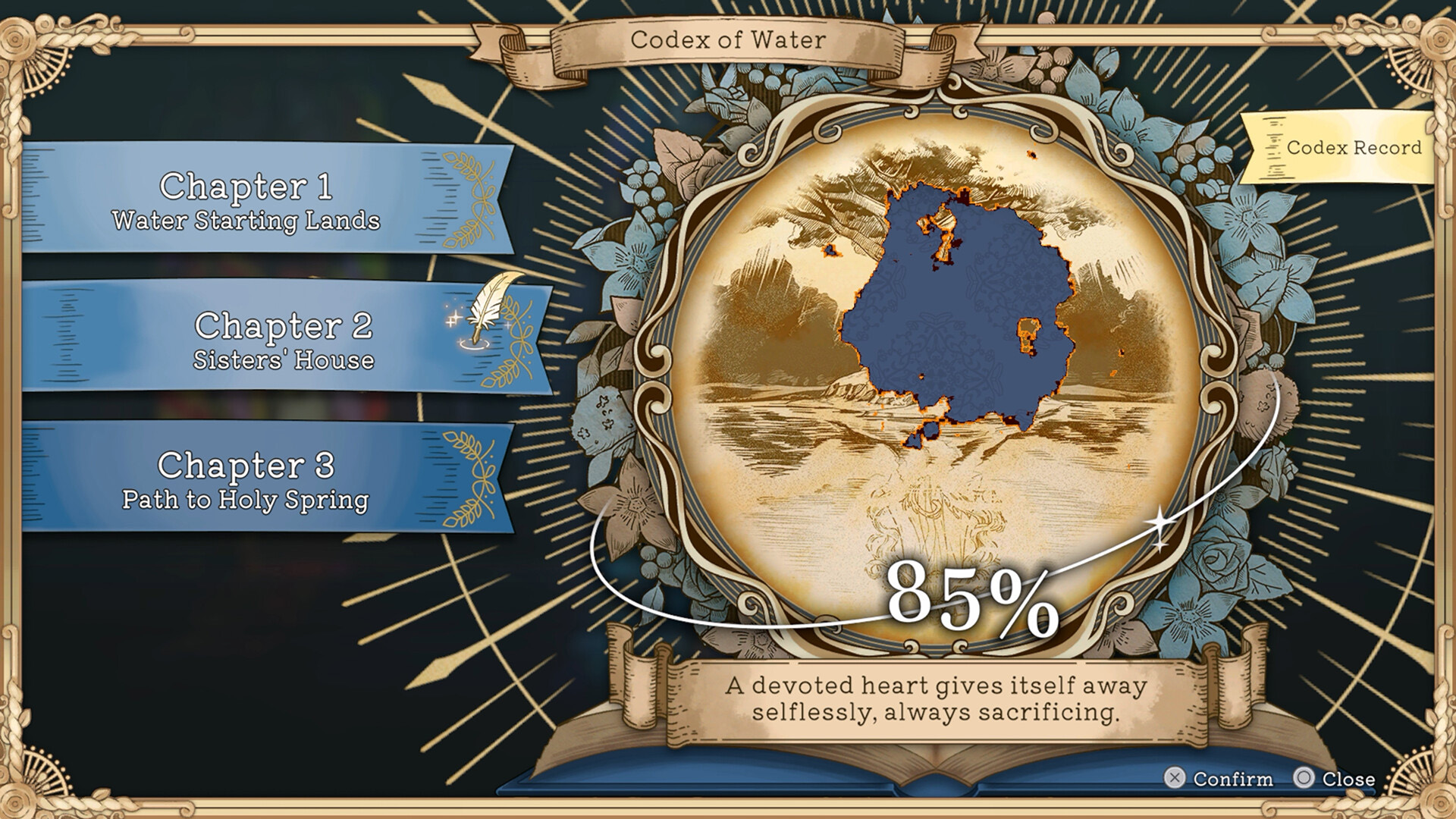
If you aim for 100% Codices repair, the map uses colour to indicate which areas are done, while black and white means an Altered Point remains. This system highlights areas to explore without holding your hand. You can fast travel between save points and summon Divina, Ariana’s mentor, to make items and upgrade spells.
You’re free to quit exploring a Codex and return to the Library at any time, and jump into a different codex if the feeling takes you. Exploration opens up the further you go into a Codex, as Ariana unlocks new abilities that help her traverse the pages. She can unlock a double jump to reach higher areas, a dive kick to smash certain floors, and a mid-air dash that lets her… I’m sure you can guess.
The weird thing, and the thing that I feel stops the game from being a “Metroidvania” as I mentioned earlier, is that none of these power-ups is essential to finish any Codex other than the one where they’re acquired. At least in the first four Codices. Backtracking is required only for 100% completion, not for story progress, so it’s completely optional, unlike in the aforementioned genre. Of course, you need to utilise them all in the final three books, but there’s no backtracking required; it’s possible to 100% clear those Codices the first time you enter them. But I’m getting caught up on semantics, so I’ll move on.
All in all, Ariana and the Elder Codex is a fantastic little game. I have my complaints, sure, like I feel the exploration and level design is a little underdeveloped, but maybe that’s on me for expecting more of a “Metroidvania” than an RPG. The combat is fun and frantic, but once you find a spell that works, that’s it for the rest of that Codex, so a little more enemy variety or a more in-depth strength/weakness system would have been nice.
As for everything else, no complaints. It looks fantastic, and the environments have a lovely sketch-like quality that really sells the illusion of being inside a living novel. The music is great too, but I suck at talking about it, so I won’t. What I will say, however, is that if you’re a fan of games like Odin Sphere and Dust: An Elysian Tale, this is one for you, and if you like the side-scrolling action RPG genre in general, you should definitely pick this up. I genuinely hope this does well enough to get a sequel.
Disclosure: I received a free review copy of this product from Keymailer
