
Ys X: Nordics originally came out in this part of the world in October 2024, over one year after its Japanese release. I played it for a few hours on launch but dropped off it after a day or two for reasons long forgotten, but most likely due to the first few hours being quite underwhelming, at least compared to previous titles in the series.
I’ve loved the Ys games ever since I first covered Ys VIII: Lacrimosa of Dana for this very website, so in all likelihood, I would have gone back to Nordics had it not been for the fact that barely two months after the UK launch, an enhanced edition was announced for Japan with a bunch of extra content and quality of life improvements.
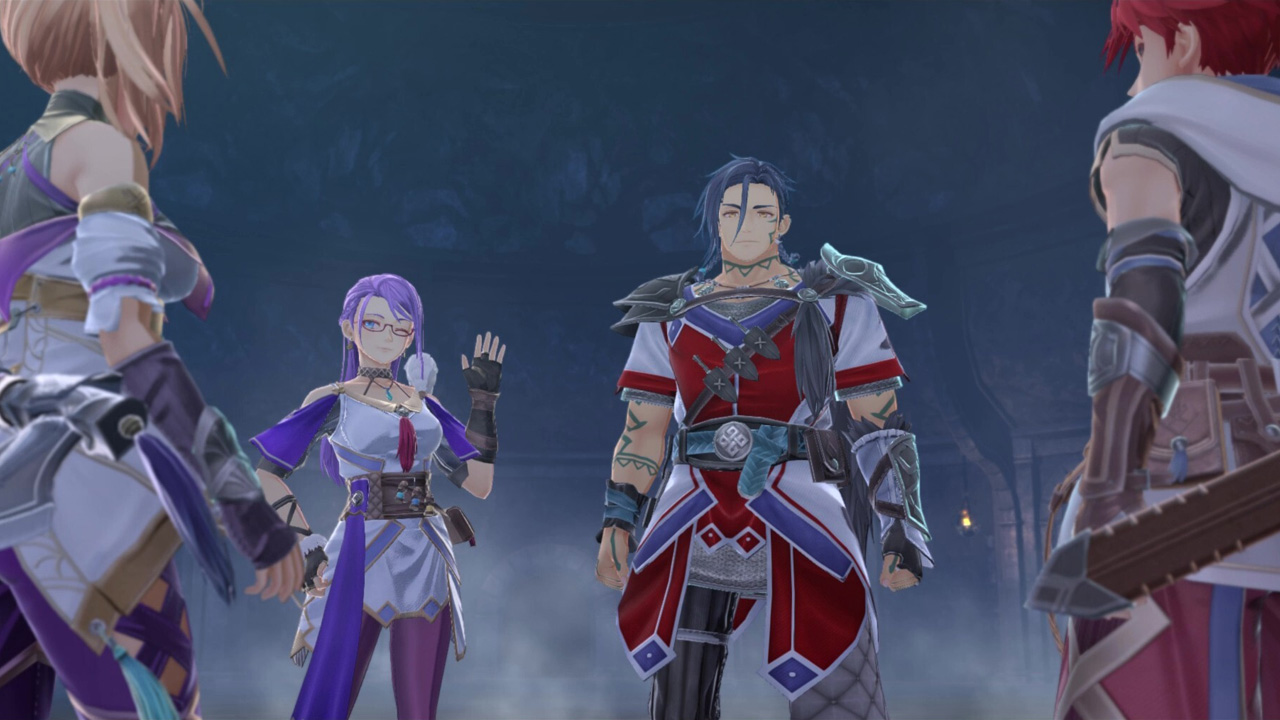
Despite being the 10th mainline title, Proud Nordics is the third game in the timeline, taking place after Ys Books 1+2 and sees series hero Adol Cristin and his newfound friends Dogi and Dr Flair try to make their way to the land of Celceta. The ship they’re travelling on is boarded by Normas and Adol, and the rest of the passengers are forced to dock at the port town of Carnac.
While hanging around Carnac, a seashell gives Adol magic powers and bonds him to Karja Balta, the young daughter of the Norman leader, and a fierce warrior in her own right, in a way that just makes me think of Knuckles Chaotix. The pair must then sail around the local seas, exploring islands, fighting an undead force known as Griegr (that only they can kill), and figure out a way to break the ties that bind them, forming a bond of friendship even stronger than a magic rope.
It sounds like I’m taking the piss, and I’ll admit that I am a little bit, but that’s the gist of the story. I’ll leave the rest for you to discover because, despite the absurdity of the thing, it is a fun little adventure, full of action, mystery, and some genuine heart. The only issue I have is that there’s just so much of it.
The action and exploration are constantly interrupted by long stretches of repetitive exposition and general chitchat in the guise of character development, which often feels like unnecessary filler. The first 10 or so hours, especially, are so plagued with this start-stop-start gameplay that playing Proud Nordics made me remember exactly why I dropped off Nordics the first time around.
I realise that complaining about the amount of talking in an RPG is a weird point of contention, but it’s a pattern I’ve noticed with lots of series as time goes on. I remember playing Final Fantasy VII and being absolutely floored (and in subsequent playthroughs, bored) when I got to Kalm and had to sit there for 30 minutes as Cloud told the tale of the night Sephiroth became a wrong-un. Too many RPGs these days will push that to an hour or longer, and Ys is no exception. In the first hour of Proud Nordics, I was in control of Adol for maybe 5 minutes; for the rest of the time, I was watching a stiffly animated cartoon.
The Ys games have definitely become more “wordy” as time has gone on, but this one is by far the most egregious. Even more so now that they’ve added two extra characters, a bunch of new story and a whole new area to explore.
Now that Adol is part of a sea-faring people, gameplay is split between sailing the open sea and exploring the islands you happen upon on your journey. Island exploration usually comprises battling your way through hordes of enemies on the island’s surface until you reach a dungeon, usually a cave, that holds the key to moving the story forward or a nice reward for your trouble.
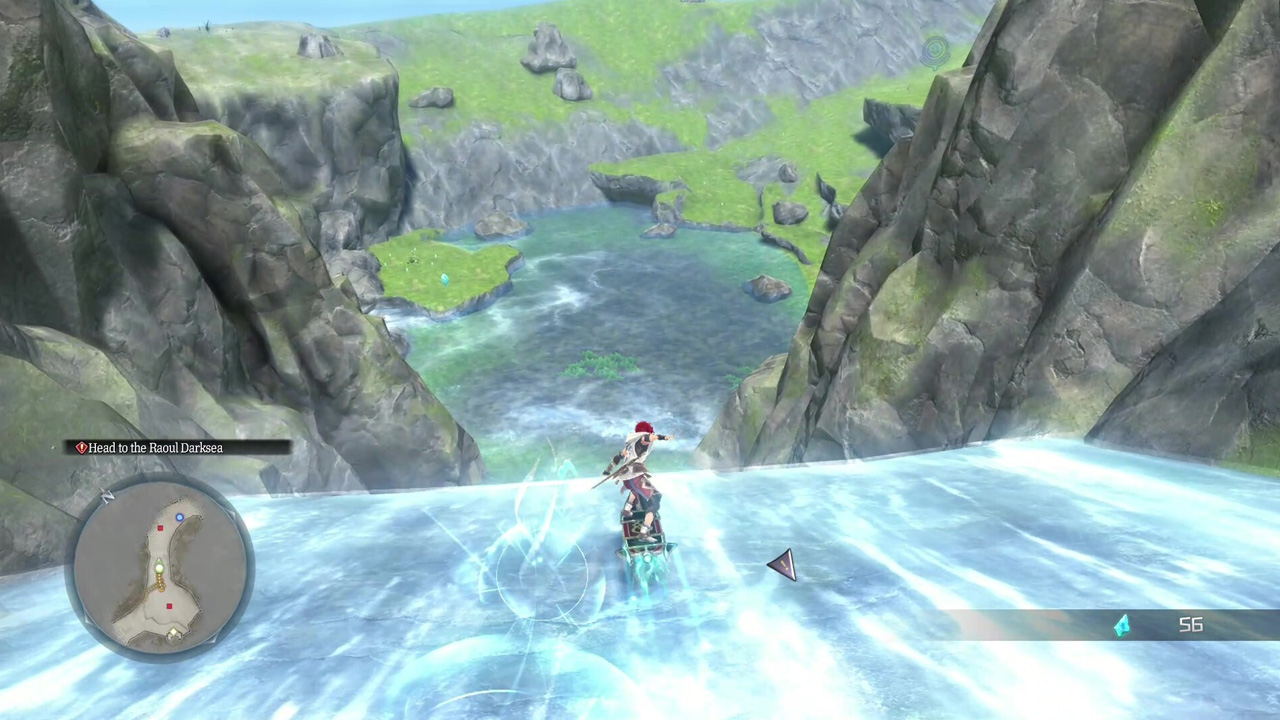
Exploration is enhanced with the help of Mana Actions, special actions Adol and Karja can take after finding the relevant antique. The two main ones you’ll use on your adventure are the Mana String, which is used to swing across chasms, close the distance between enemies, or later pull objects in the field, and the Mana Ride, a hoverboard-like contraption that lets you glide across surface waters and marshes to hard-to-reach areas. There are more, but I don’t want this paragraph to be a listicle.
Dotted around the island map are structures called Hewnstones. Getting close to these obelisks will restore your health, and if it’s your first time using one, it’ll activate as a fast travel point on your map. Some Hewnstones are covered in “miasma” and can’t be used until they’re purified, which you do by holding down the interact button for a bit. You can purify Hewsnstones from the word go, so the whole thing seems like an unnecessary mechanic added just to waste time, which is an odd choice when the Ys series is known for its momentum-based gameplay.
Combat in Proud Nordics is as fast and furious as it’s ever been in the series. Adol has a regular attack he performs by mashing the X button with reckless abandon, and holding R1 and pressing a face button will perform the special attack assigned to that button. Skills consume SP, which recovers over time, and defeating an enemy with a skill will instantly restore half of its SP cost. Using the same skill over and over again will raise its mastery. Once a skill has reached 100% mastery, its power will increase, and by using items called Elden Fragments, you can raise a skill’s mastery even further.
The Ys series is known for changing its main combat mechanic every few games, from the first game’s bump combat to the aggressive and intense solo combat of the early 3D games, to the party combat from VII onwards. The switch up this time comes in the form of Duo Mode.
By holding R2, you enter Duo Mode and take control of both Adol and Karja at the same time. Pressing X now performs joint attacks which see both characters going ham on their intended target, and the remaining face buttons each now house a Duo Skill which can be unleashed for some truly spectacular damage. These attacks become even more powerful when unleashed with a full Revenge Gauge, which is filled up while guarding in Duo Mode.
The weird thing is, R2 is the guard button. So, holding R2 guards, but also enters Duo Mode, so as long as you’re not attacking in Duo Mode, you’re guarding. Having Adol and Karja attack together is also insanely powerful, so I had to actively force myself not to just hold down R2 and absolutely steamroll everything in my path because, despite sounding like fun, it gets quite boring after a while. As the story progresses, there are sections where Adol is alone, and later on, there are sections where the pair are separated, so Duo Mode isn’t an option, but for the most part, it is the most efficient way to attack.
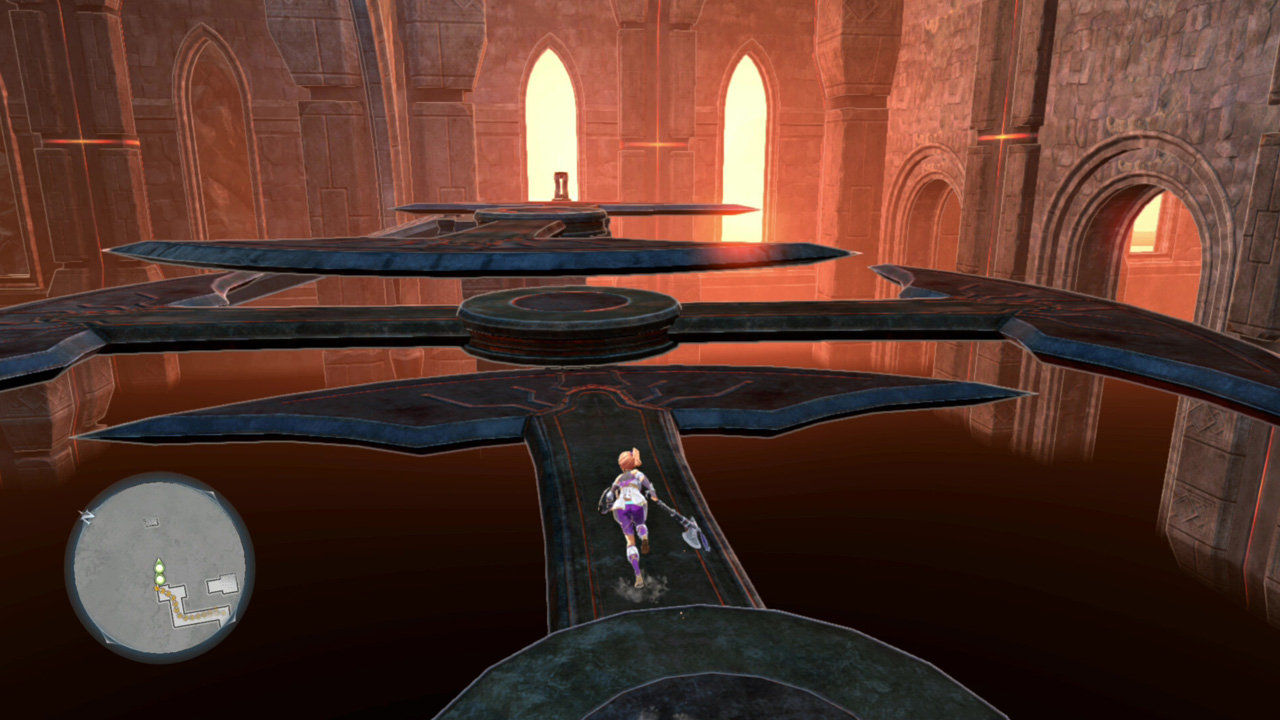
There are some new battle mechanics I thought were quite cool, like enemies’ Power and Speed Attacks. When an enemy flashes a red light, they’re about to do a Power Attack, which can only be guarded while blocking in Duo Mode, and when they flash a blue light, they’re about to do a Speed Attack, which can’t be blocked but can be countered by sprinting into the attack with L1 and attacking when prompted. They’re nice additions to the combat that keep you on your toes, although Power Attacks are redundant for the most part, as for the majority of the game, guarding is Duo Mode, but I’m not going to start all that again.
Some enemies have a durability meter and cannot be damaged until it is depleted. I think I’ve ranted about this in other reviews I’ve done, but I’m sick of the whole durability/stagger meter thing in games. It’s just a poor excuse for damage sponge enemies and a cheap way to artificially inflate difficulty without putting in the effort to make the fight fun or interesting. I don’t like it in other games, and I don’t like it in this one.
An addition I do like, however, is the ability to revive your fallen partner. If Adol or Karja are defeated in combat, you take control of the last one standing. Approaching your fallen ally and holding the square button will give them half of your HP and revive them, bringing them back into the battle, but leaving you vulnerable and in need of healing.
There are a couple of ways to heal, should you need them. Throughout your adventure, you’ll find Empty Bottles. By using ingredients and recipes you collect along the way, you’ll be able to mix medicines and keep them in the bottles. Using a medicinal item leaves an empty bottle, which can be refilled. There are also box lunches that can be eaten for special effects and work in much the same way. I don’t mind the medicine bottle system; it’s a good way to offer a healing option without allowing players to spam heals to brute force their way through a tough fight, but I can’t talk much about the box meals because I kept forgetting they existed.
The main, and indeed the easiest, way to strengthen Adol and Karja is to level up. Defeating enemies grants you EXP, and accumulating enough EXP will trigger a level up, increasing Adol and Karja’s stats as well as fully healing them, which I have to admit has saved me from dying and losing a fight against a horde of enemies on multiple occasions.
The second, and slightly more fiddly, way to strengthen the adventurous pair is to upgrade their Release Lines. As you level up and purify Hewnstones, you will accumulate Mana Points – red for Adol and blue for Karja. These are used to unlock Release Nodes. Once you have unlocked a release node, you can place a Mana Seed inside it, giving a buff to things like attack, defence, and resistance. Nodes have a level assigned to them, and only seeds of a matching level or lower can be slotted into them.
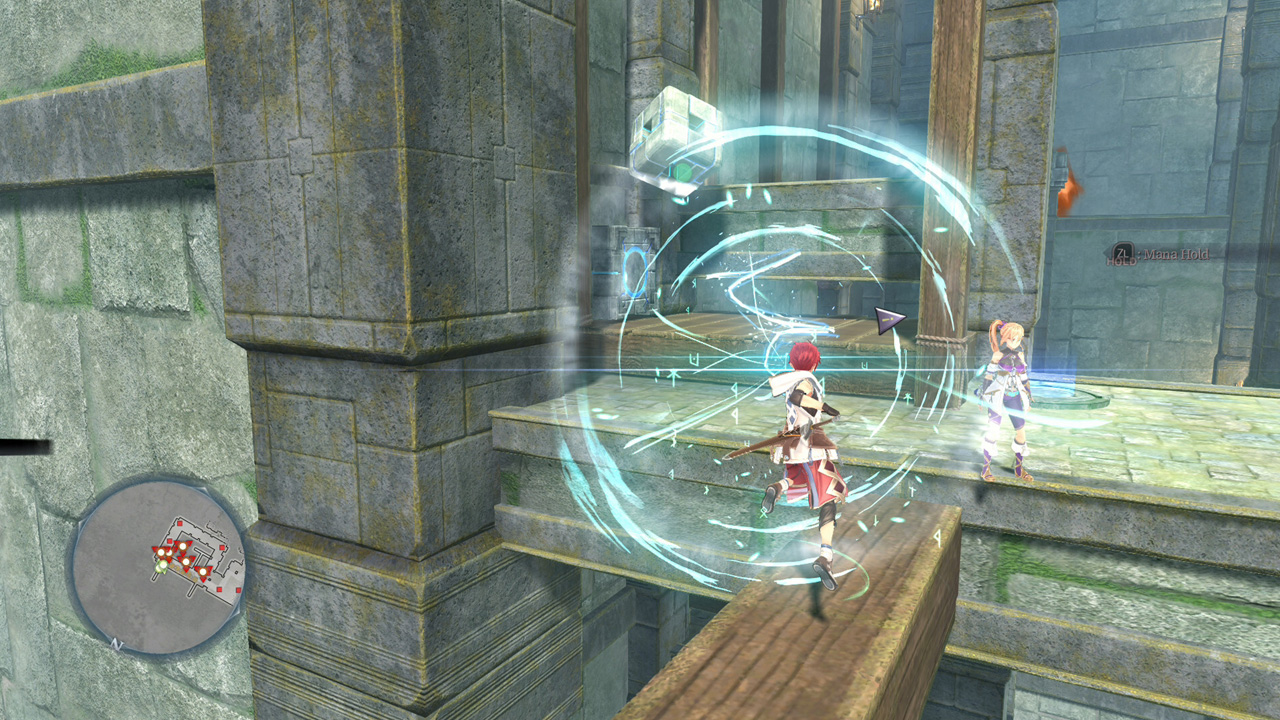
Once a seed has been placed the corresponding lines will extend out, activating abilities based on the number of connected lines, so it Mana seeds placed on a release line will cause a line corresponding to the seeds type to extend out, activating mana abilities based on the number of connected lines, so it’s beneficial to keep several connected lines as the same type of seed in order to squeeze out the optimal number of abilities before moving on. At least that’s what I did…
The biggest shake-up to the Ys formula, and the one I probably should have talked about earlier, is the ship gameplay. The ship controls fairly well, if a little slowly. Thankfully, there are options to speed up a little, such as sailing through air currents (represented by turquoise paths on the open sea), and pressing L1 gives you a small speed boost. There’s a cooldown on the boost action that feels like it takes an eternity to recharge, but mercifully, it charges almost instantly once you ride an air current. Learning to chain boosts and air currents together is the key to quick sea traversal and is incredibly satisfying to pull off.
When at sea, it’s possible to leave the helm and explore your ship, The Sandras. Adol is free to walk around and speak to the members of his ever-growing crew, or you can use the menu to instantly teleport to various locations on the ship. When exploring the Sandras, you can check out various records of your adventure so far, and as the crew grows, you’re able to mix medicine, enhance weapons, and buy or barter for various items from an onboard store. You can also invite your allies to have a luncheon with you, which activates a variety of special effects that come in super handy during the many battles you’ll have at sea.
The ocean surface is covered in giant circular symbols that initiate sea battles whenever you enter them. Red symbols will summon standard ships to battle, whereas purple ones will bring in more difficult ships, and gold symbols will create new air currents when the battle is won. These are the ones I focused my time and attention on because the game is a lot more fun when it doesn’t feel like you’re sailing through mud.
Ship-to-ship combat is more arcadey than in other sea-faring games, and it totally works to its advantage. You have a forward attack, which fires standard projectiles which are weak but able to slow down enemy ships enough to destroy them with your Ex Armaments, more powerful attacks fired from either your port or starboard side.
Much like land combat, holding R1 and pressing a face button will perform the special attack assigned to that button, but special projectiles have limited ammunition, so they can’t be relied on in heavy combat situations. Thankfully, it’s replenished whenever you make landfall, so as long as you’re not taking on too many combat encounters at once, you’re good to go crazy.
Some of the more powerful enemy ships have a durability meter, but once it’s been depleted and the ship has come to a standstill, you can barge into it with L1 and initiate an abordage. This sees Adol and Karja board the enemy ship and take on several waves of enemies until they’re all defeated and the dynamic duo claim the ship’s treasure, sending the old boat down to Davey Jones’ locker. Boarding a ship is easily my favourite thing to do during sea battles and turns the fight from arcadey to cinematic.
There are also island strongholds that need to be recaptured. This is done by fighting off wave after wave of enemy ships while destroying barrier pillars. Once these pillars have been destroyed, the barrier around the stronghold disappears, and Adol and Karja are able to breach the occupied island. This is done by clearing several rooms in the base, usually ending with a boss fight. Much like Abordage, these are a lot of fun and break up the sailing a little. You’re even ranked for how well you do and are able to replay any if you’re not happy with your score.
The Sandras can also be enhanced by paying and providing materials to a shipwright to upgrade the ship in areas such as speed, defence, and various weapon damage. It’s an essential mechanic as the Sandras isn’t the best when it starts out, and it can make sailing more frustrating than fun, but thankfully, the upgrades make a noticeable difference, and in no time at all, I was having a blast sailing around.
For the most part, I enjoyed my time with Ys X: Proud Nordics. The combat is fun, but it can get repetitive quite quickly, and the same goes for the ship combat. I loved the setting and the Viking-esque theme as a whole, and Karja really grew on me as a companion to Adol, despite the fact that there was way too much story that kept me away from the action for longer than I would have liked.
There is a lot of game here, and at the risk of sounding like I’m complaining that my steak is too juicy, there’s perhaps a little too much game. There’s a seemingly never-ending stream of upgrades and mechanics on offer here, and even up to and beyond the halfway point, the game was still throwing new mechanics and tutorials at me, to the point it felt a little overwhelming at times and had me hankering for the comparative simplicity of Ys VIII.
I’d catch myself thinking “I’m bored, I don’t think I’m enjoying this” only to have something happen, like a set piece involving a giant whale that gives Sonic Adventure a run for its money, to snap me out of it and say out loud “I love this ridiculous game” so often it gave me emotional whiplash.
It’s not a bad game by any stretch of the imagination. I just found it exhausting to play, and as much as I enjoyed it when I was enjoying it, I do hope that Nihon Falcom reel it in a little and takes things back to basics for Ys XI.
Disclosure: I received a free review copy of this product from Keymailer
