
A few years ago, I played a wonderful little game called Bug Fables. It was my first ‘paper’ RPG, a term coined by the Paper Mario series, which the aforementioned game drew heavily from. I enjoyed it immensely, and it led me to check out other similar games, although I didn’t get very far. The Thousand-Year Door hadn’t yet seen its Switch release, and I found The Origami King to be wonderful to look at but a chore to play, mostly due to its combat system and my brain not being wired for it. I also tried The Outbound Ghost, and for reasons I can’t remember, didn’t like it, so I gave up.
Since then, I have been dubious of RPGs of a paper persuasion and have given them a wide berth. But for some reason, the trailer for Escape From Ever After caught my attention. The visuals were slick, the combat looked tight, and it seemed to ooze personality and humour. So when we were offered the chance to review it, I decided to throw my trepidation to the wind and give it a go, and I couldn’t be happier to have given this gem a chance.
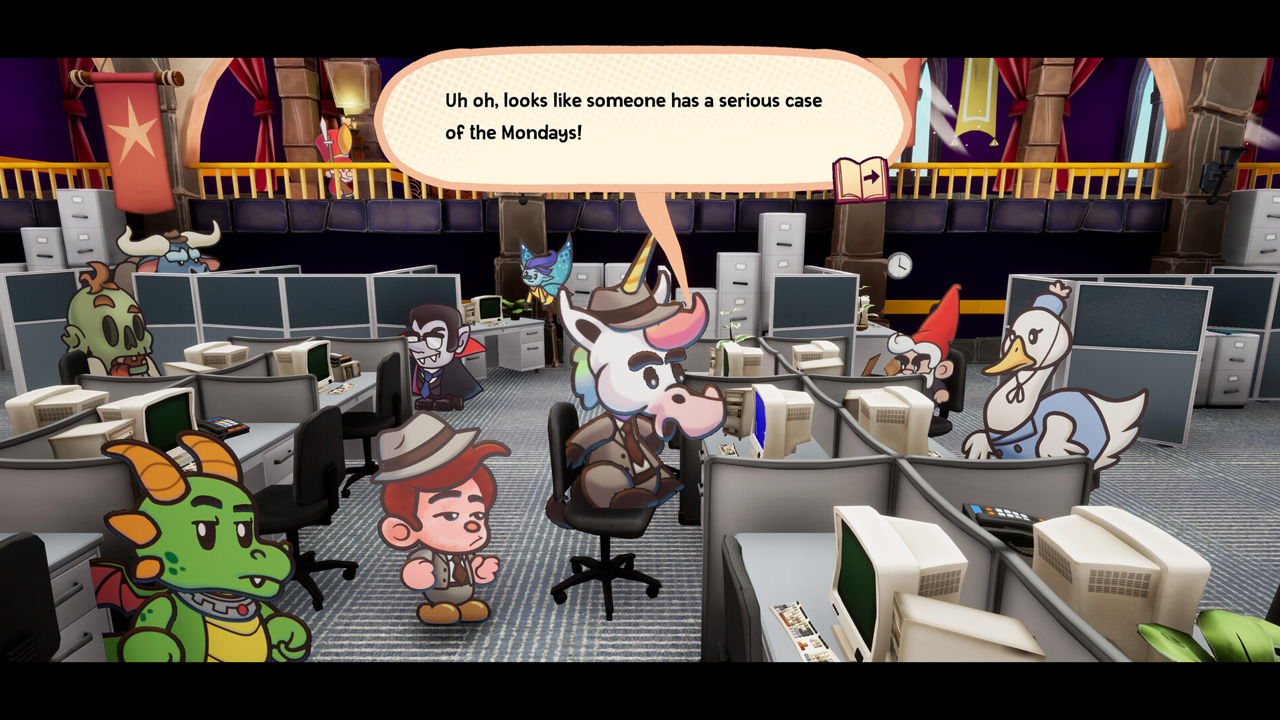
The story follows Flynt Buckler, a young hero, as he sets out to stop the evil dragon known as Tinder. This story is then immediately thrown out the window as Flynt arrives at Tinder’s castle to see that it has been transformed into an office building for a corporation calling itself Ever After Inc.
Ever After Inc. has found a way to enter storybooks and bring them all the comforts of the modern world through forced compliance that really is for their own good. Honest. Flynt then ends up as an employee of Ever After Inc and teams up with his arch nemesis Tinder to secretly bring the corporation down from the inside and reclaim the dragon’s castle.
I’ll leave the hows and whys for you to discover for yourself, as I feel giving anything else away would spoil the fun because this is one of the funniest and best-written games I’ve played in a while. The dialogue and situations had me smiling at a bare minimum, giggling throughout, and genuinely laughing out loud a handful of times.
I’ve worked in an office for many, many years, and I genuinely hate most things about it. I especially despise corporate lingo and anyone who uses it unironically, so I have to give props to the game’s sole writer, Daniel Whitworth, who has absolutely nailed the office stereotypes and indecipherable word soup people spout in an attempt to come across as more intelligent and important than they are. Underneath the playful dialogue and silly jokes lies a real disdain for that kind of workplace culture, and as a jaded and undervalued slave to the grind myself, I appreciate that.
I know comedy is subjective, and this style of humour won’t be for everyone, but for me it ticked all the right boxes. I’ll admit there were a couple of jokes that didn’t quite land, but the game didn’t linger on them, and before I had a chance to complain, we’d moved on to something else, and I was laughing again. I honestly can’t praise the writing enough.
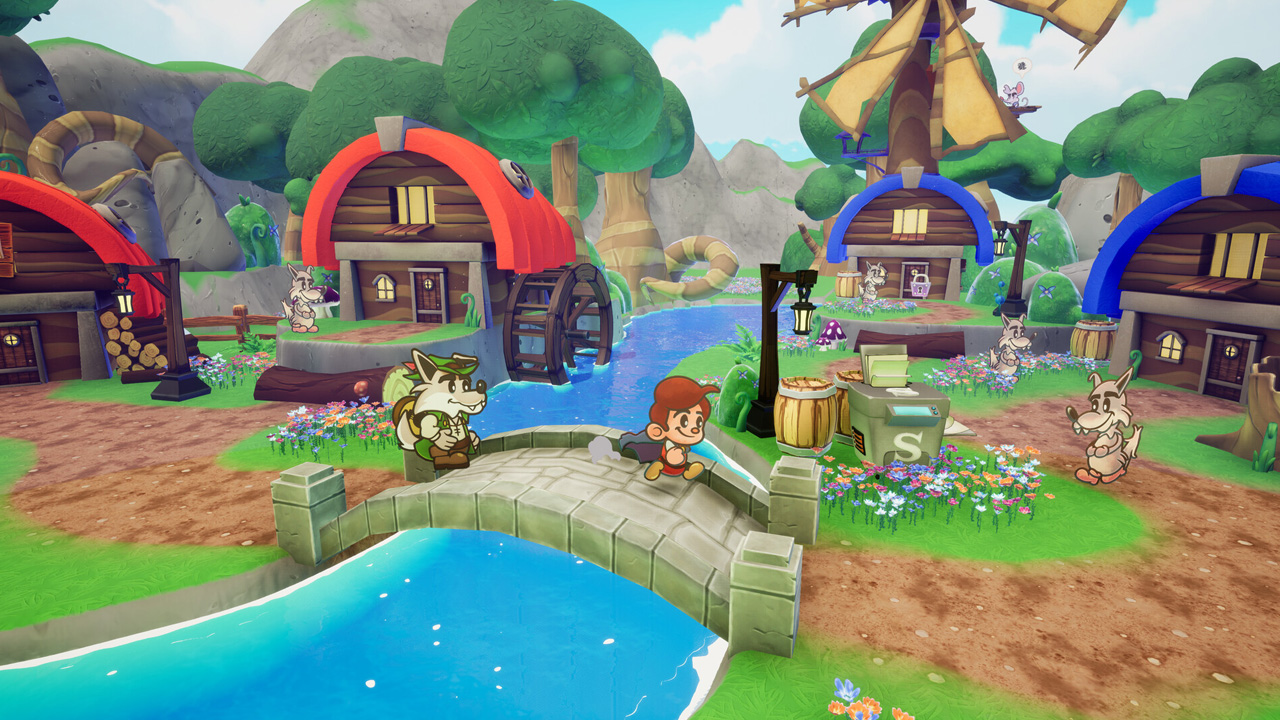
Being an RPG, the gameplay is split between exploration and combat, and because of how my notes are ordered, I guess I’ll cover exploration first.
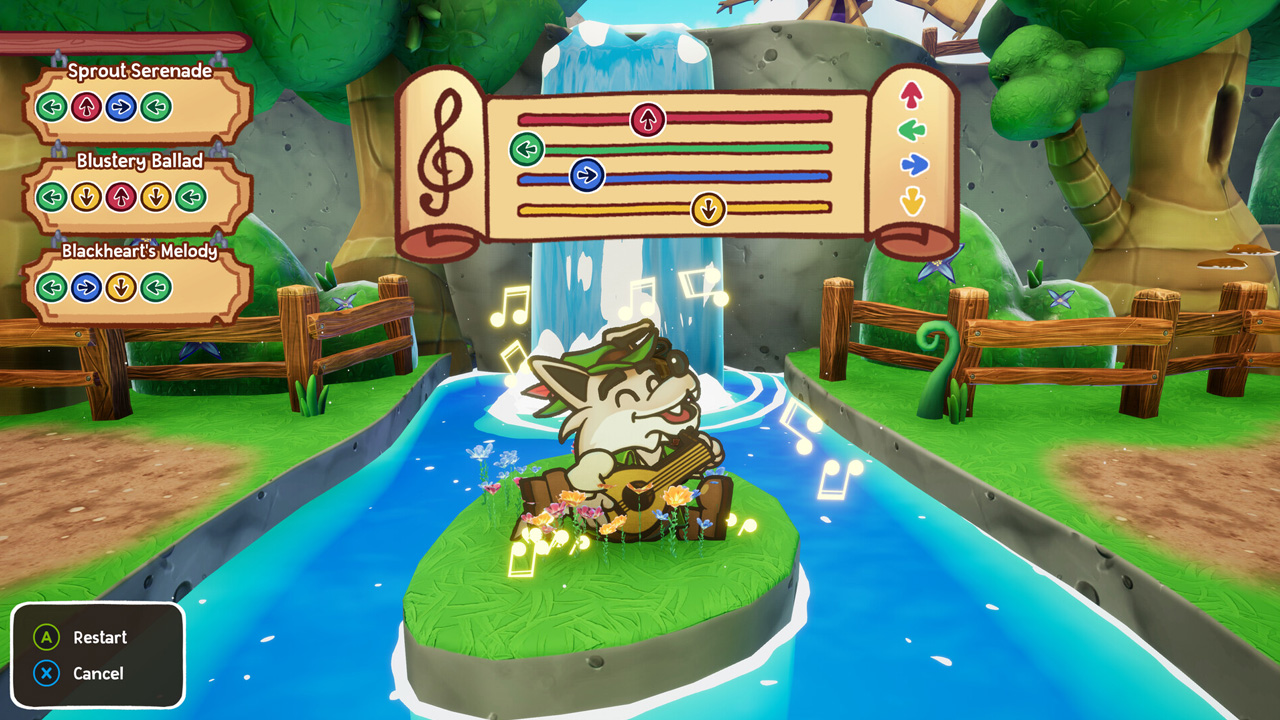
Flynt can run, jump, and throw his shield like Captain America to smash boxes, flip switches, and get the jump on enemies. His companions also have their own special abilities that can be used to interact with the environment, like Tinder using her fire breath to light torches and burn things, or Wolfgang playing his lute, to “harness the power of nature” and make plants grow to allow access to previously inaccessible areas in a style so similar to Link playing his Ocarina I’m surprised Nintendo haven’t put a hit out on the developers.
Tinder’s castle acts as a hub area to the world that Flynt and his friends visit, and is full of secrets to find and favours to fulfil for the other employees of Ever After Inc. As Flynt recruits more characters to his party and the story progresses, more areas of the castle become accessible to explore, and I am genuinely impressed by how large and full of stuff to do it is. On top of the side quests, there are shops to buy various items and costumes, and a challenge called The Stairs of Success, which sees you climbing 100 floors, with each floor containing enemies to fight, and finishing the game unlocks a Boss Rush challenge for any masochists out there.
The castle isn’t the only place you’ll be traversing, however, as Ever After Inc. has developed a technology that allows Flynt and his cohorts to jump into storybooks and explore their worlds. These are a mix of well-known fairy tales and legally distinct versions of popular stories, although said stories are in the public domain, so I’m not sure why they needed to change the names, but the changes that have been made often lead to some funny “WTF” moments, so I’m not complaining.
The design of these worlds is spectacular, full of twisting interconnected routes and deviously clever environmental puzzles that left me groaning and shouting out “of course!’ on more than one occasion. The stories in each book have a funny twist on the tale they riff on, and dozens of entertaining NPCs to meet and befriend.
If I had one complaint about the exploration, it would be the platforming, which is a lot. There’s nothing wrong with the controls as such. Flynt has a decent jump with a good arch, though he feels a little heavy for my liking. No, my issue stems from the depth perception (or lack thereof) caused by him being a 2D character in a 3D environment.
Sure, he has a little shadow underneath him, which helps a bit, but I’d definitely have had a better time if said shadow were a little bigger, or if there were an option to add a ring highlight, similar to the one found in games like Crash Bandicoot 4. Also, Flynt can only throw his shield to the left and the right, making it tricky to get a first strike on enemies that are up or down screen from him, which can get annoying at times.
Escape From Ever After uses a turn-based combat system with timing-based actions, meaning that every action utilises timed button presses or an interaction of some kind that should be familiar to anyone who’s played Paper Mario. For example, after Flynt has thrown his shield, pressing the action just as he catches it will cause him to throw it again for an extra attack, and each character has some kind of button press or action to do when they attack for additional damage.
Each party member can perform a selection of special attacks by spending Mocha Points (MP), which, like regular attacks, also require timed button presses and the like to be executed successfully. Failing to enter these inputs correctly will cause them to fumble the attack, wasting precious MP. Special attacks can also be improved by collecting and using Ink Bottles with a particular NPC, adding attack power and various other effects. I’d love to speak more on them, but I think I only used the same three or four attacks throughout my playthrough, so I’d have liked to have had more variety to entice me into using different party members more often. Saying that, the skills I did use were very effective, so two thumbs up from me.
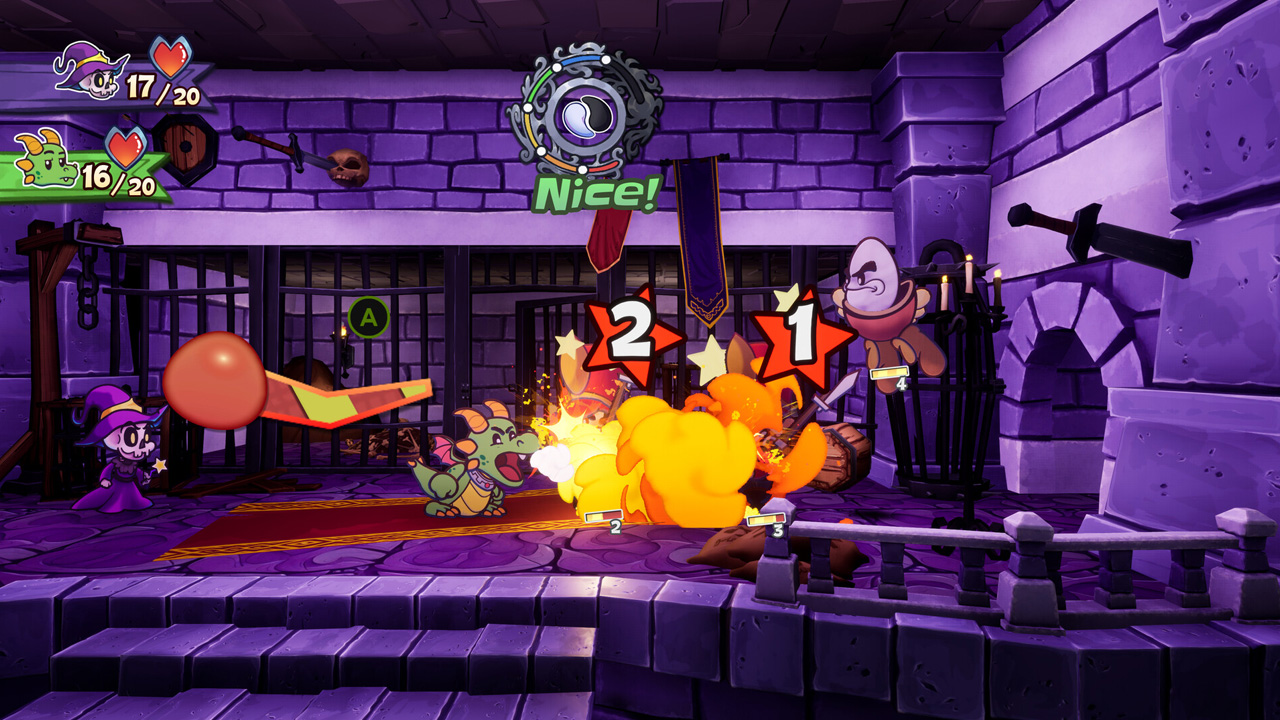
Flynt and his crew can also perform a block by pressing the action button at the right time during an enemy attack to reduce damage received; perfectly timed presses can negate damage completely. And finally we have Synergy Points (SP) that are gained through successful action command and blocks and are used to perform team actions such as restoration which heals a set amount of Hit Point (HP) and MP to the party, or a special attack that sees the whole party get involved, with each becoming stronger as the story goes on and more members join the adventure.
I’m a big fan of the Synergy system. My personal favourite attack by far is Tinder’s ‘Blazing Whirlwind’ which sees each party member throw a flame icon onto Tinder’s growing fire, which then turns into a minigame where you have to catch those flames with a little fire tornado as they fall from the sky, with Tinder’s aforementioned Blazing Whirlwind growing in size with every three flames you catch before being unleashed upon your enemies. I also relied on the Restoration command far too much, thanks to the game’s limited inventory slots restricting how many health items I could carry, to the point I was blatantly exploiting it during the latter floors of The Stairs of Success.
For such a simple combat system, there’s a surprising amount of depth and strategy to it. Enemies will sometimes carry shields that deflect frontal attacks or hold their weapons at certain angles to prevent close-range attacks. Some will even have a defence modifier to reduce how much damage they receive, so which party member to use and when becomes important.
You only have two characters on the field at once, so you will often need to swap members out depending on which enemies you’re facing. Thankfully, this limitation has been taken into consideration, and during your first turn, you can swap any characters around for free and still use them during that turn. Any swaps after that, however, will use a turn. I’m a fan of the free swap mechanic. Having to swap characters out at the beginning of a turn because you’re fighting something the current setup can’t damage, and then having to wait until your next turn to attack, often feels like punishment for not being clairvoyant, so a free swap keeps things feeling fair.
Overall, I’m a huge fan of this combat system. The little interactions keep what would otherwise be a simple and quite mundane fight exciting, and I always got a kick out of using the Synergy attacks. As fun as it is, however, I did find myself getting frustrated whenever I’d misscountering an enemy attack and taking full damage even though I’d swear I’d pressed the action button in time. I don’t know if it was a bug or a skill issue, more likely the latter, but it was annoying all the same. But even that issue has been addressed, and there’s an option to switch on attack and block assists if you need them.
Bolstering their battle prowess further, the party are able to equip Trinkets. These come in various forms and offer bonuses such as new special attacks, extra HP, and passive skills like poison and burn resistance. These cost Trinket Points (TP) to equip, with each party member starting with 4 and increasing them as they level up. Trinkets can be found everywhere, from treasure chests to shops, and there are more than I could count. In fact, I’d argue there are probably too many, as most of the ones I’d collected went unused once I’d found the ones that matched my play style and stuck with them for the majority of the game.
Defeating enemies gets you XP, and every 100 you receive will see your whole party go up a level. When you level up, you get to choose from one of the three upgrades: an additional 3 HP, an extra 4 MP, or 1 more TP, and these are given to each party member.
I’m not the biggest fan of systems like this, as I always worry that I’m “doing it wrong” and not speccing correctly, which takes some of the enjoyment out of the game for me. Here, because I’m not particularly good at dodging, I just chose the extra HP every time, turning my party into a battalion of tanks. It wasn’t until near the end of the game, when I had some powerful trinkets, that I decided to start choosing TP, which subsequently made me second-guess my decision to put so much into HP when I could have been utilising defence trinkets. As you can probably tell, I tend to overthink these things.
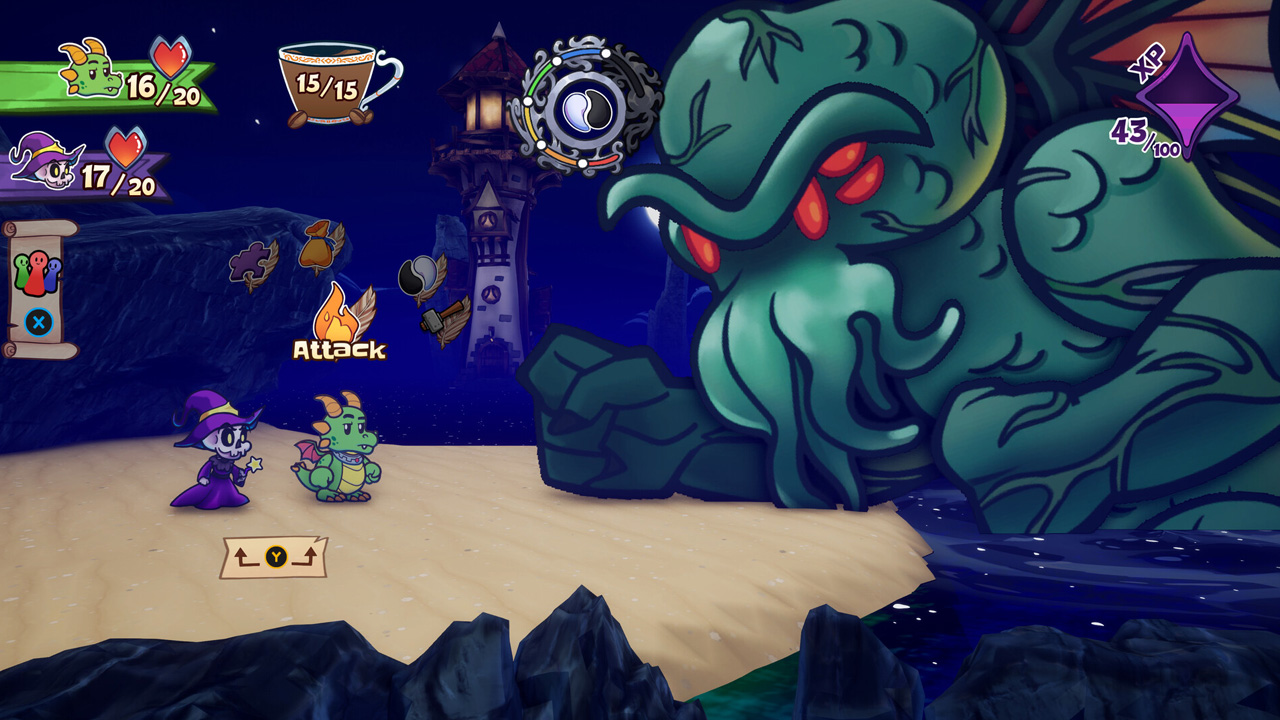
In fact, seeing this written out in front of me, I wouldn’t mind playing through it again and trying a build aimed more toward Trinkets and MP, so you could make an argument for the game having some decent replayability on top of everything else that makes it great.
Escape From Ever After is one of the best games I’ve played in a long, long time, and if this is how 2026 is kicking things off, we’re in for a great year. This game has absolutely blown me away, and even though I finished it a few days ago, I still find myself putting it on for a bit to mop up missed trophies, just for an excuse to keep playing.
I love how colourful and expressive the characters are, and how cleverly each level is designed. I thought Whitworth’s music (yes, he’s also the games composer) was pretty good. It’s cheery and uplifting, perfectly complementing the storybook visuals. But I didn’t think much else of it at the time. And then I woke up to its music playing at full volume in my head, unable to shake it out. As the days went on, more and more tracks found their way into my brain, and before long, this whimsical background music had become certified earworms.
What’s even more impressive is that the majority of the work involved comes to two people, Daniel Whitworth and Ryan Kitner, and is one of those exceptionally rare cases of a Kickstarter game that isn’t a failure or a con. Early development on the project began in 2020 by Sleep Castle Studio (Whitworth), before launching the Kickstarter campaign in November 2022 for the then-titled Flynt Buckler Wakes The Sleepy Castle.
It managed to hit 60% of its $40,000 (CA) goal in less than 24 hours, with the project becoming fully funded 3 days later, and by the time the campaign had finished Sleep Castle Studio had managed to raise over $92,000 (CA), more than doubling the original goal, achieving every one of their stretch goals in the process. It’s an amazing achievement for such a small team, and the result is a game I cannot recommend highly enough.
Disclosure: I received a free review copy of this product
