
During The Game Awards 2024, AdHoc Studio revealed its first game, Dispatch. Somehow, I completely missed this and was taken by surprise when I learned of its existence shortly after launch. I ended up putting my money down after a brief look at the visuals, but I absolutely did not expect to jump into a superhero workplace drama.
And yet, the moment I learned it had that classic Telltale flavour running through its veins, I was in. I have a soft spot for the games that understand choice is more than simply branching paths, but about tension. The best Telltale stories were not perfect, but they made you feel responsible for people. Tales from the Borderlands and The Wolf Among Us are still high points for me, partly because they nailed that balance of humour, heart, and consequences that hang in the back of your mind after you put the controller down.
Dispatch takes that DNA and drops it into a world where superheroes and villains are the norm. Capes exist. Henchmen exist. Ridiculous street-level crimes exist, right next to city-shaking terror attacks. It is normal here, which is precisely why the game can get away with being a bit weird.
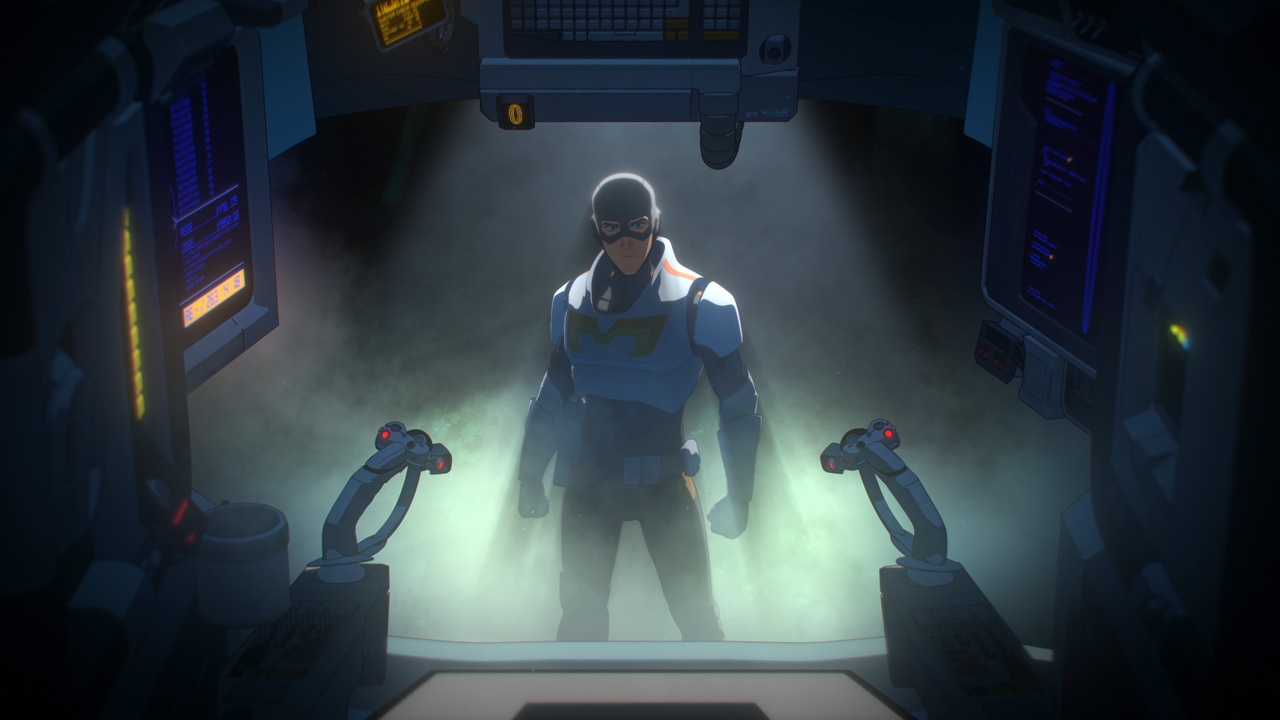
You play as Robert Robertson (Aaron Paul), better known as Mecha Man. He is not a hero with powers; he is a guy in a suit, and that suit is his whole deal. Think less “chosen one” and more “stubborn bloke who refuses to stop doing the right thing”. Early on, he scraps with a villain called Shroud and pays the price. His suit ends up damaged beyond what he can personally fix, and rather than magically finding a new one in the next scene, he has to do something way less glamorous.
He has to get a job.
That job is Dispatch Operator for SDN, a superhero-for-hire company that sends its heroes to paying customers when trouble pops off. Sometimes that means rescuing a cat stuck in a tree. Sometimes it means turning up to a coordinated attack and hoping the people you sent do not make everything worse. SDN also has a new initiative to rehabilitate ex-villains into heroes, and Robert gets handed the worst-performing members, affectionately known as the Z-Team.
Structurally, Dispatch is split into two main parts. The first is the narrative side: beautifully animated cutscenes that look as though they took notes from Invincible, then decided to have a bit more fun with facial expressions and body language. More importantly, it is where the game does its Telltale thing. You are making choices in conversations, picking sides, lying when it feels necessary, and occasionally saying the dumbest possible thing because your pride gets the better of you. The familiar “so and so will remember that” pops up, and even if that message has become gaming’s fast food by now, it still works.
If you are coming in expecting the old Walking Dead format, there are a few differences. You are not walking around small environments, clicking on objects, and doing light puzzles to progress the story. Dispatch does not do that. It strips out the wandering and focuses on momentum. That might disappoint people who miss those quieter exploration beats, but I did not find myself missing them much, because the game replaces them with something that gives you a different kind of tension.
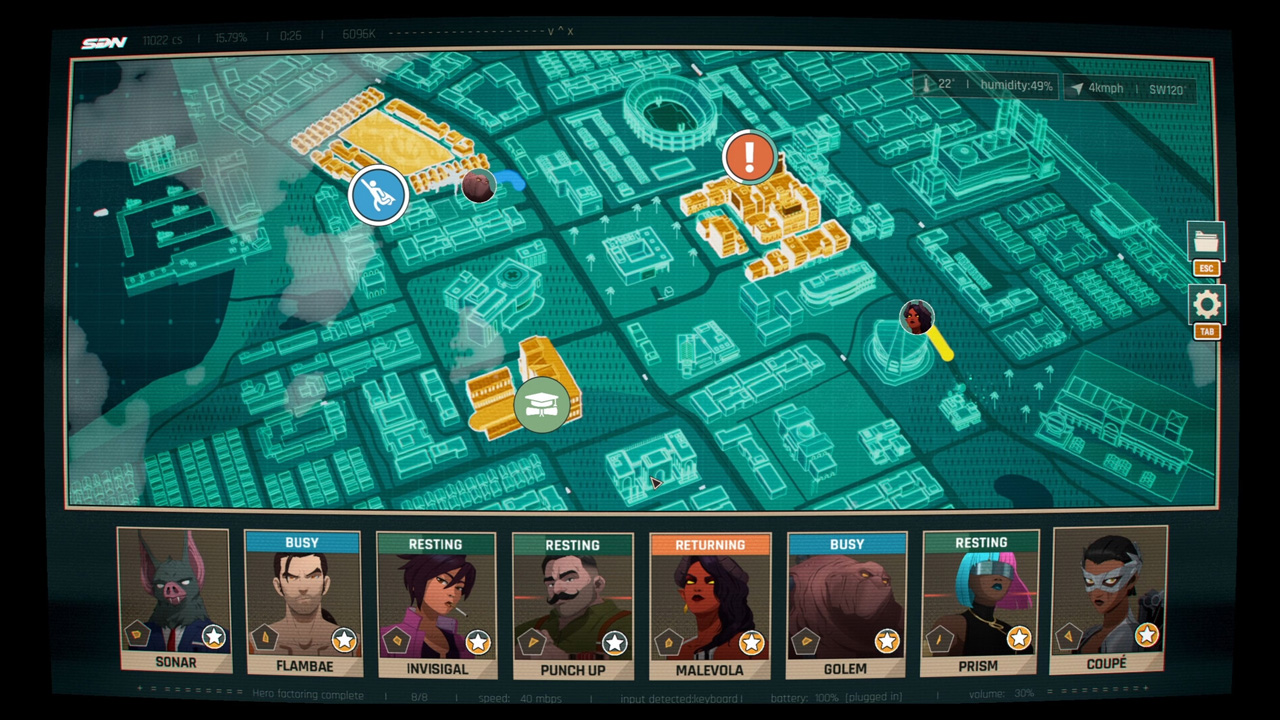
Between story segments, you sit at your desk with a city map, your roster of heroes, and a stream of incidents popping up across districts. Your job is to pick the right hero for the right situation, decide whether to send support, and consider which team-ups might trigger extra perks or abilities when the right combinations are paired together. Then you hit go and watch the consequences play out.
It is a simple loop on paper, but it quickly becomes frantic once the game starts layering on timing, recovery, and your team’s emotional state. After each job, heroes need time to rest before they are available again. You cannot just spam your best option on every event. Success earns experience points, which you can use to boost stats and make certain heroes better suited to specific categories of problems. Failure can leave a hero injured, shaken, or feeling down, and those negative statuses matter because they influence how reliable that hero will be on the next mission.
There is also a hacking mini-game that drops in during dispatch segments, which historically has not been a popular addition in gaming (Bioshock and Marvel’s Spider-Man say hello). It is usually busywork masquerading as tension. Here, it actually works more often than not, mainly because it is frequently tied to an ongoing mission with an actual time limit. You are not hacking for the sake of hacking; you are hacking because your team is out there, something is going wrong, and your fiddly little puzzle is the difference between getting the job done and failure. If that still sounds like your personal nightmare, the accessibility options let you switch it off.
The writing is sharp enough to carry the format, and confident enough to let characters be flawed without instantly sanding them down into likeable shapes. Your supporting cast is consistently entertaining to manage and talk to. You get that satisfying sense of learning what makes each one tick, not just mechanically on the dispatch screen, but personally in the quieter story scenes.
It is not perfect, and I do not want to pretend it is. There are threads that feel like they are building towards a more sinister element, then never quite cash out. Locking acts of heroism behind a paywall is a genuinely interesting idea, and the game toys with it, but not in a way that ever lands a real punch. There is also a lot of immature humour that will absolutely bounce off certain people (not me, I’m a giant child). It is the stuff that can be funny in the moment, then slightly irritating if it lands during a scene that should probably be allowed to breathe.
Pacing helps, too. This is split into eight episodes, all included in the price, with no season pass nonsense. They were released within a month of launch, which turned out to be a bright sweet spot. It was quick enough that I did not lose interest between episodes, but spaced out enough that I ended each one eager for the next. Now that everything is available, you can binge it, but that rollout schedule is worth remembering if a Season 2 ever happens.
Voice acting is another big reason the cast sticks. You have a proper roster of talent here. Aaron Paul leads, bringing the right mix of tired sincerity and stubborn drive to Robert. Alongside him, you have names like Laura Bailey, Travis Willingham, and Matthew Mercer, all doing what they do best, which is making animated characters feel like they have a pulse. Then you have the influencers. MoistCr1TiKaL, jacksepticeye, Joel Haver, and others. Usually, that is the bit where I brace for tonal whiplash. The surprising thing is how well they fit. Whether that is brilliant casting, good direction, or both, they mostly hold their own.
I played the whole thing on Steam Deck, and aside from one early crash, it ran as well as I could reasonably expect. Performance stayed solid, the visuals still popped on the smaller screen, and it came across as a good match for the serialised format.
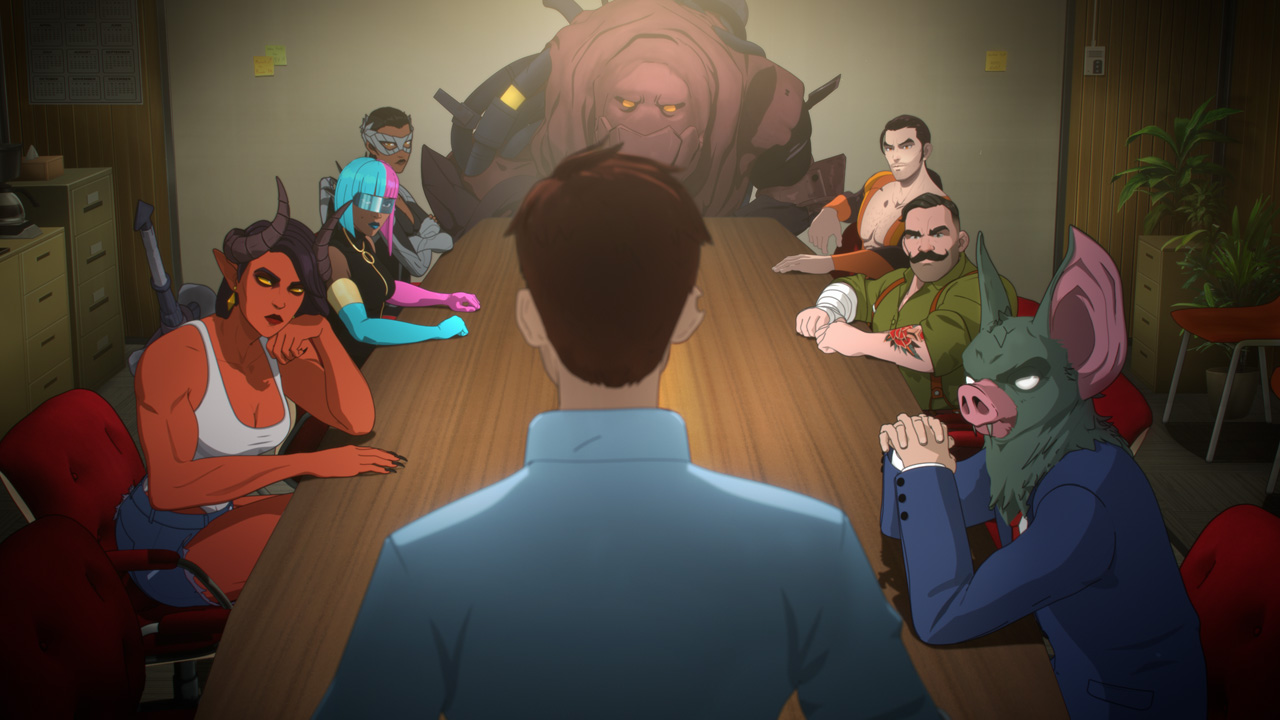
What surprised me most, though, was how quickly I went back for a second playthrough. I am not usually a multiple-run person with interactive film games. I commit to my choices, accept the consequences, and move on. I do not often need to see the “bad” version of myself. Dispatch made me want to, not out of achievement hunting, but because I wanted more time with the supporting cast. I wanted to see how relationships shifted, how the Z-Team line-up changed, and how different decisions reframed scenes.
To be clear, this is still built from Telltale stock in one crucial way. The endings are similar. The major milestones are still broadly where they are meant to be. If you are expecting wildly divergent finales, you are going to clock the limits of the structure. The difference is the journey. It is the texture of scenes, the way characters respond to you, the little instances that sting or land differently because of what you said three episodes ago. That kept me entertained through a second run, even as I noticed the rails beneath me.
Dispatch is not trying to reinvent the genre. It is trying to remind you why this genre worked in the first place, then gives you a second gameplay layer that holds your attention between the drama. The fact that it succeeds at both is what makes it special.
If the highest compliment I can give a choice-driven game is that it made me immediately start a second save, then yes, Dispatch earned its cape.
